Alaska's Most Beloved Check Is in Jeopardy—Here's What's at Stake for Every Resident
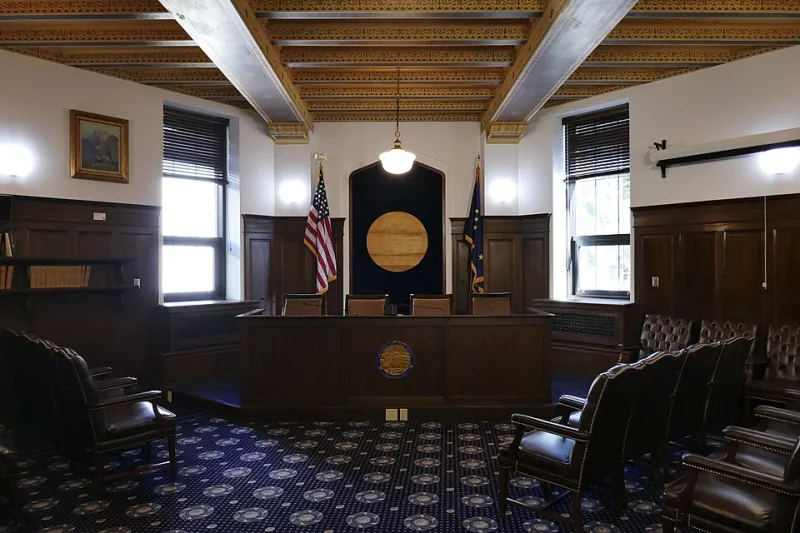
Photo: Ifly6, CC BY-SA 4.0, via Wikimedia Commons
For more than four decades, the Alaska Permanent Fund Dividend has represented something rare in American governance: a direct, annual financial benefit paid to every qualifying state resident, funded by the wealth extracted from Alaska's own land. It is not a welfare program. It is not a tax credit. It is, by design, a share of the commons—a recognition that Alaska's natural resources belong to its people.
Yet that foundational promise is increasingly strained. A combination of fiscal pressures, shifting legislative priorities, and unresolved debates over the state's long-term budget structure have placed the PFD in a precarious position. For Alaskans who rely on the dividend—and for those who simply believe in its underlying principle—the time to pay attention is now.
The Fiscal Reality Closing In
Alaska operates without a personal income tax or a statewide sales tax, making it almost uniquely dependent on oil revenues and investment returns from the Permanent Fund itself. When oil prices dip or production declines, the state's general fund feels the strain almost immediately. That vulnerability has been on full display in recent years.
The Alaska Permanent Fund Corporation manages assets exceeding $76 billion, making it one of the largest sovereign wealth funds in the United States. However, the question of how much of that fund can be drawn upon annually—and for what purposes—has become one of the most contentious debates in Juneau. The Percent of Market Value (POMV) draw, established in 2018 to create a more predictable budget framework, caps annual withdrawals at 5 percent of the fund's average market value. That cap forces a direct competition between PFD payouts and general government spending, including education, public safety, and infrastructure.
In practical terms, every dollar directed toward the dividend is a dollar not available for state services—and vice versa. Legislators on both sides of the aisle have struggled to find a durable formula that satisfies constituents who want a robust dividend and those who prioritize fully funded public services.
Legislative Proposals That Could Change Everything
Over the past several legislative sessions, proposals to restructure or reduce the PFD have emerged with increasing frequency. Some lawmakers have advocated for enshrining a specific dividend formula in the state constitution, which would require a public vote to alter—providing stronger long-term protection. Others have proposed capping the dividend at a fixed dollar amount regardless of fund performance, effectively decoupling it from the original statutory formula that once produced payments exceeding $2,000.
Perhaps most significantly, there have been recurring discussions about redirecting a larger share of the POMV draw toward the general fund, which would, by mathematical necessity, shrink the pool available for dividend distributions. Proponents of this approach argue that adequately funding state government is itself a form of investment in Alaskans' well-being. Critics counter that reducing the dividend disproportionately harms lower-income households and rural communities, where the annual payment often represents a meaningful share of household income.
The lack of a formal, constitutionally protected dividend formula remains the program's central vulnerability. Without it, each legislative session carries the potential to reset the calculation.
Who Feels the Impact Most
The PFD is not a uniform benefit across the state's economic landscape. In Anchorage or Fairbanks, a $1,000 to $1,500 dividend may be welcome but not transformative. In rural communities across Western Alaska, the Interior, or the Arctic—where the cost of living is dramatically higher and cash employment is scarce—the annual payment can mean the difference between financial stability and genuine hardship.
Families in villages like Bethel, Kotzebue, or Dillingham often use the dividend to cover heating fuel costs, stock up on groceries that must be flown in, or purchase essential equipment before winter. Reducing or eliminating the payment without addressing the underlying economic isolation of these communities would impose a burden that urban policymakers may not fully appreciate.
This geographic dimension is not incidental—it is central to any honest conversation about the dividend's future.
What Alaskans Can Actually Do
Advocacy on this issue is not the exclusive domain of lobbyists or political insiders. Alaskans at every level have meaningful tools available to them.
Engage directly with your legislators. The Alaska State Legislature holds public hearings on budget matters, and written testimony submitted to the House and Senate Finance Committees is part of the official record. Constituent communication genuinely influences legislative behavior, particularly in a state as small and politically competitive as Alaska.
Attend town halls and community meetings. Many legislators hold informal constituent sessions during interim periods. These gatherings offer direct access to the people making decisions about the PFD's structure.
Support constitutional protection efforts. Organizations advocating for a constitutionally enshrined dividend formula are active in Alaska, and joining or supporting those efforts adds to their political weight.
Stay informed and share reliable information. Misinformation about the PFD's funding mechanism is widespread. Understanding how the POMV draw works, how the statutory formula was calculated, and what specific proposals are currently under consideration allows residents to participate in the debate with clarity and credibility.
Vote in every election—including primaries. Alaska's ranked-choice voting system has altered the political calculus in meaningful ways. Candidates' positions on the dividend are often clearest during primary campaigns, when they are speaking most directly to their base.
A Program Worth Defending
The Permanent Fund Dividend is not simply a government payment. It is an expression of a foundational Alaskan belief: that the state's extraordinary natural wealth should benefit the people who live here, not just the industries that extract it. That principle deserves a vigorous, informed defense.
The pressures on the dividend are real, and the legislative debates are complex. But complexity is not a reason for disengagement—it is a reason for deeper involvement. Alaskans built this program through decades of political will, and sustaining it will require the same.
The future of the PFD will be shaped in committee rooms, at public hearings, and ultimately at the ballot box. The residents who depend on it—and who believe in what it represents—are the most important voices in that conversation.