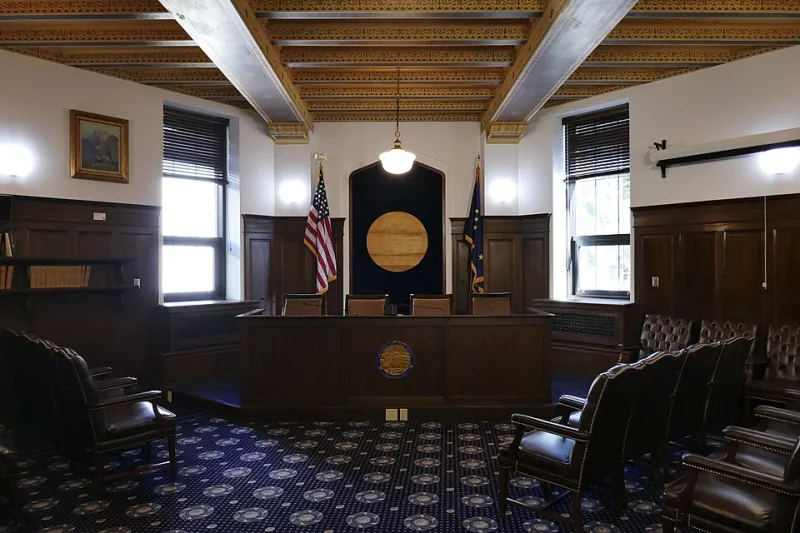
Small Towns, Big Influence: How Alaska's Villages Are Rewriting the Rules of State Politics
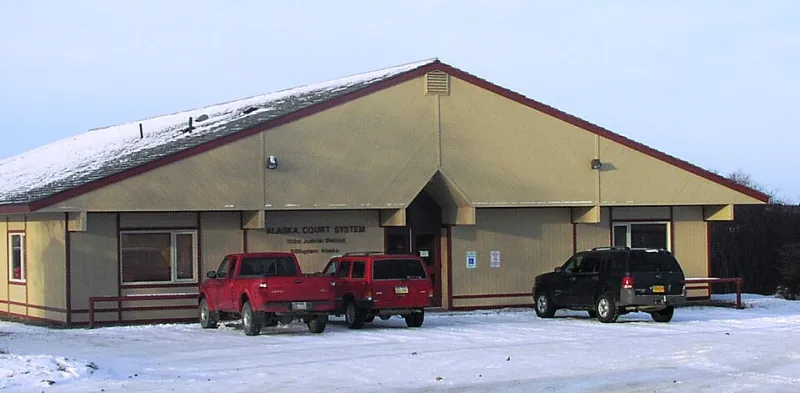
Photo: U.S. Department of Agriculture, Public domain, via Wikimedia Commons
The conversation about Alaska's political future tends to begin and end in Juneau. Legislators convene, committees deliberate, and the machinery of state governance turns—largely removed from the daily lives of people in communities where the nearest paved road might be a flight away. It is an understandable perception. But it is an incomplete one.
Across the state, in places that rarely appear in political coverage, something consequential is happening. City councils in towns of a few hundred residents are passing resolutions that eventually travel to the capitol. Tribal organizations are building coalitions that influence state agency decisions. Village-level ballot measures are setting precedents that larger municipalities later adopt. The geography of Alaska's political power is shifting, and the shift is being driven not by consultants or party machinery, but by residents who decided that waiting for Juneau to act was no longer an acceptable strategy.
The Myth of the Centralized State
Alaska's sheer physical scale makes centralized governance a practical challenge. The state encompasses more than 663,000 square miles, with hundreds of communities accessible only by small aircraft or boat. Many of these communities are not incorporated municipalities at all—they are unorganized boroughs, tribal entities, or census-designated places with limited formal governmental infrastructure.
For decades, this reality was treated as a political liability. Communities without formal borough status lacked direct representation in regional governance. Tribal governments operated in a legal gray zone relative to state authority. Rural voices, while numerous in aggregate, were diffuse and difficult to organize across such vast distances.
What has changed is not the geography. What has changed is the capacity and willingness of local leaders to work within and around those constraints.
Local Ballots as Policy Laboratories
One of the most underappreciated mechanisms of rural political influence is the local ballot measure. In communities where city councils and tribal governments have the authority to put questions before voters, these measures have served as testing grounds for policies that later gain traction at the state level.
Dillingham, a Bristol Bay community of roughly 2,300 residents, has been at the forefront of debates over commercial fishing regulations and resource extraction—debates that directly inform how the Alaska Board of Fisheries and the state legislature approach those questions. When local governments in the region take formal positions through resolution or ballot initiative, it signals to Juneau that an issue carries genuine community weight.
Similarly, communities along the Yukon and Kuskokwim Rivers have used local governance structures to push back on state decisions about subsistence fishing allocations—an issue with profound cultural and economic significance for Indigenous Alaskans. The formal resolutions passed by tribal councils and city governments in these areas are not symbolic. They enter the public record, they are cited in regulatory proceedings, and they create political accountability for state officials who might otherwise dismiss rural concerns as peripheral.
The Organizers Juneau Doesn't See
Behind these local actions are individuals who rarely appear in statewide political coverage. They are city council members in communities of 400 people who spend their evenings drafting testimony for state agency hearings. They are tribal administrators who have built relationships with legislators over years of persistent, unglamorous outreach. They are school board members in rural districts who understand that decisions made in Juneau about education funding will determine whether their communities can retain teachers.
In Kotzebue, local leaders have been central to regional conversations about Arctic development policy, climate adaptation, and infrastructure investment—topics that carry immediate, practical consequences for Northwest Arctic communities but that are often framed in Juneau as abstract policy debates. The specificity of local knowledge that these leaders bring to those conversations is something that no lobbyist or legislative staffer can fully replicate.
In Southeast Alaska, communities like Wrangell and Petersburg—small, resource-dependent towns with long histories of civic engagement—have demonstrated that organized local voices can meaningfully shape timber and fisheries policy, even when those policies are nominally set at the federal or state level. The key has been sustained, coordinated advocacy rather than episodic complaint.
The Role of Tribal Sovereignty
Any honest account of grassroots political power in Alaska must reckon with the role of tribal governance. Alaska is home to more than 200 federally recognized tribes, many of which operate in communities that lack conventional municipal government. These tribal entities are not merely cultural institutions—they are governmental bodies with legal standing, administrative capacity, and an expanding footprint in policy advocacy.
Over the past decade, Alaska Native tribal governments have become increasingly sophisticated participants in state-level political processes. They submit formal comments on regulatory proposals. They engage state legislators directly on issues ranging from public safety to child welfare. They participate in coalitions that give rural communities a collective voice that individual villages could not achieve independently.
The Alaska Federation of Natives, the Council of Athabascan Tribal Governments, and regional tribal consortia have all developed policy advocacy functions that extend well beyond their original service delivery mandates. The result is a layer of political infrastructure in rural Alaska that is often invisible to urban observers but is increasingly consequential in Juneau.
Why This Matters for Alaska's Future
The conventional wisdom holds that Alaska's political outcomes are determined by the interplay of oil industry interests, party dynamics, and the preferences of the Anchorage-area population, which represents the state's largest concentration of voters. That framework captures something real, but it misses the degree to which sustained local organizing can disrupt expected outcomes.
Alaska's ranked-choice voting system, adopted by voters in 2020, has altered the incentive structure for candidates in ways that may amplify rural influence. When candidates must appeal beyond their base to earn second and third-choice rankings, the political salience of organized rural communities increases. Candidates who once ignored small-town concerns now have tactical reasons to engage.
More broadly, the communities driving this grassroots political engagement are not doing so out of abstract civic virtue. They are responding to real and immediate pressures: declining state services, unresolved questions about resource revenue distribution, climate-driven threats to infrastructure and subsistence resources, and a persistent sense that decisions affecting their lives are made without their meaningful input.
The response has been to build power where they can—locally, incrementally, and with a long-term view that is often absent from Juneau's legislative calendar.
A Different Kind of Political Story
Alaska's political narrative is too often told as a drama staged in the capitol building, with a cast of legislators, governors, and industry representatives. That story is real, but it is not complete.
The fuller story includes the city council member in a Southwest Alaska village who stays up past midnight to file written testimony before a state agency deadline. It includes the tribal administrator in the Interior who has spent a decade building a relationship with a key legislative committee chair. It includes the school board in a rural borough that passed a resolution on broadband access that eventually became a line item in a state infrastructure bill.
These are not minor footnotes to Alaska's political history. They are evidence that the state's future is being shaped not only in Juneau, but in every community with the will and the capacity to make its voice heard.