The Frontier Is Now the Front Line: Alaska's Arctic Moment Demands More Than Bases
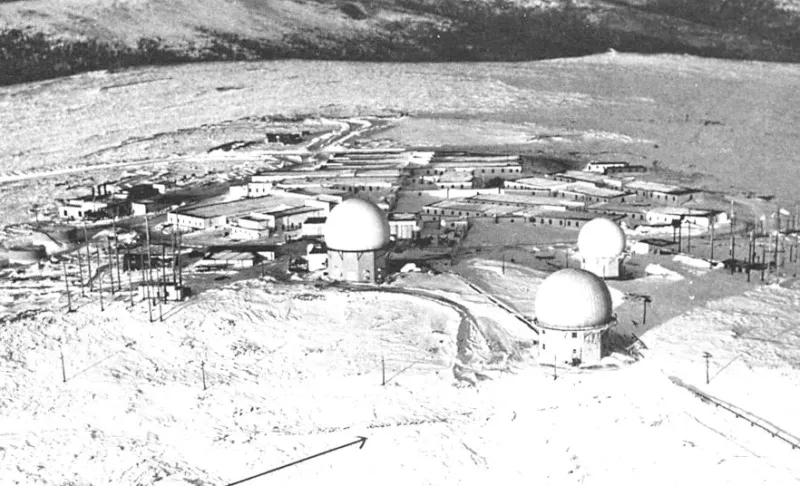
Photo: United States Air Force, Public domain, via Wikimedia Commons
Washington Has Discovered the Arctic. Alaskans Live Here.
For decades, American strategists treated the Arctic as a footnote—cold, distant, and strategically quiet. That era is over. Melting sea lanes, Russian fleet modernization, Chinese polar ambitions, and the renewed salience of missile defense have made Alaska's coastline and installations central to national security planning. Five potential adversaries' capabilities now converge on or near Alaska territory, and the Pentagon knows it.
This attention brings money: construction contracts, expanded Guard facilities, port improvements, radar modernization, and the jobs that follow. For a state perpetually wrestling with fiscal gaps, the temptation to simply say yes to everything is real. But Alaskans First would offer a caution: strategic interest is not the same as partnership, and an outpost is not a community.
The Economic Case—And Its Fine Print
The upside is genuine. Military spending already ranks among Alaska's largest economic sectors, and Arctic buildup multiplies it. Clear Air Station, Fort Greely, Eielson, and Joint Base Elmendorf-Richardson anchor thousands of jobs; new infrastructure multiplies the effect through contracting, logistics, and local spending.
But the fine print matters. Construction booms built on outside labor and outside firms can pass through a community like a barge through open water, leaving little behind. Defense spending is also famously cyclical—subject to appropriations fights, strategy documents, and administration changes. A state that organizes its economy around the next defense budget is a state that has outsourced part of its fiscal future to Washington's whims.
The Sovereignty Question
There is a deeper risk. When national security logic governs a region, decisions about that region get made in conference rooms in the Pentagon and on Capitol Hill, not in Juneau or in the villages nearest to the installations. Land access, training ranges, coastal traffic, and environmental review can all become matters determined by strategic necessity rather than local consent.
Alaska Native communities in particular have lived this history: radar sites built without consultation, lands withdrawn for defense purposes, contamination left behind when priorities shifted. The current buildup will be judged by whether it repeats that pattern or breaks it.
What Alaskans Should Demand
The state's bargaining position is stronger than it might appear. The Pentagon cannot replace Alaska's geography, its ports, or its trained Alaska National Guard—one of the most operationally experienced guards in the nation. That leverage should be spent on:
- Local hiring and contracting requirements written into federal appropriations for Arctic projects.
- Infrastructure that serves both missions—a deep-water port at Nome benefits the Navy and the fishing fleet alike.
- Environmental and cultural review with real teeth, including meaningful consultation with tribes.
- A state office of Arctic affairs to coordinate Alaska's negotiating position, rather than leaving it to whichever federal agency arrives next.
Citizens, Not Chess Pieces
Alaska has always been more than a line on a strategic map, and Alaskans have always understood something Washington forgets: the Arctic is not empty space to be defended. It is home to communities with economies, cultures, and priorities of their own.
The coming decade of Arctic investment can be the best economic opportunity this state has seen in a generation—or it can be a garrison economy that ends when the strategy does. The difference will be determined not in Washington but in whether Alaskans insist on being treated as partners in their own defense.