A Way of Life on Trial: The Mounting Threats to Alaska's Subsistence Heritage
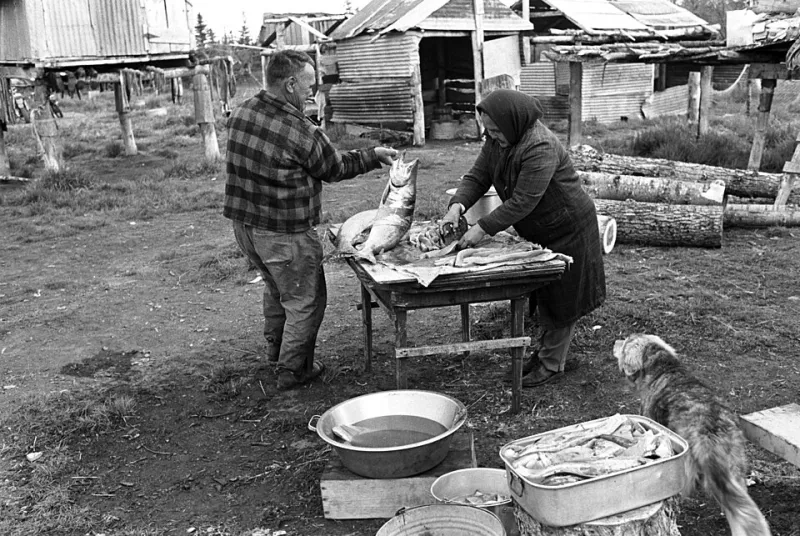
Photo: U.S. Department of Agriculture, CC BY 2.0, via Wikimedia Commons
In the village of Venetie, located in the remote interior of Alaska, elders still teach children how to read the Chandalar River for signs of the salmon run. In Togiak, on the shores of Bristol Bay, families prepare their nets weeks before the first sockeye appear. These are not recreational pursuits. They are not hobbies adopted on weekends. They are the organizing principles of entire communities—practices passed down across generations that determine, in the most literal sense, whether people eat.
Yet today, these traditions face a siege that is as complex as it is consequential. Federal agencies, state regulators, shifting wildlife populations, and distant political actors are all pulling at the legal and cultural fabric that has long protected Alaska's subsistence way of life. Understanding what is at stake requires grasping not only the law, but the land itself.
The Federal-State Fault Line
At the center of the subsistence conflict lies a jurisdictional dispute that has never been fully resolved. The Alaska National Interest Lands Conservation Act of 1980, commonly known as ANILCA, established a federal priority for rural subsistence users on federal public lands. That priority was designed to protect the hunting and fishing practices of rural Alaskans—disproportionately Alaska Native communities—from being displaced by commercial or sport interests.
The problem is that Alaska's state constitution prohibits the kind of rural preference that ANILCA mandates. Repeated efforts to amend the state constitution to bring Alaska into compliance have failed in the legislature. As a result, the federal government has assumed management authority over subsistence activities on federal lands and navigable waters—a division that has created persistent confusion, overlapping authority, and a patchwork of rules that rural Alaskans must navigate just to exercise practices their families have relied upon for centuries.
This jurisdictional friction is not merely administrative inconvenience. It produces real consequences. When federal and state agencies disagree on season lengths, bag limits, or species designations, the rural communities caught in the middle often receive contradictory guidance. Enforcement becomes uneven. And the implicit message delivered to subsistence users is that their rights are conditional—subject to revision by bureaucracies operating hundreds or thousands of miles away.
Climate Disruption and the Vanishing Harvest
Even if the legal landscape were stable, subsistence users would face a second, equally formidable challenge: the land itself is changing beneath their feet.
Alaska is warming at roughly four times the global average rate, and those changes are rewriting the behavioral patterns of the species that subsistence communities depend upon. Caribou herds are altering their migration routes as tundra conditions shift, leading hunters to travel farther—at greater expense and risk—for smaller yields. Salmon runs in certain river systems have become increasingly unpredictable, with some watersheds experiencing dramatic declines linked to warming ocean temperatures. Moose populations in parts of southcentral Alaska have contracted as tick infestations, enabled by milder winters, take a growing toll.
For communities where the grocery store is a small plane ride away and where a family's annual food security can depend on a single successful hunt, these disruptions carry enormous weight. Subsistence is not a supplement to the food supply in rural Alaska—in many villages, it is the food supply. When game patterns shift faster than traditional ecological knowledge can adapt, entire communities can find themselves facing food insecurity with no commercial alternative within reach.
Outside Interests, Inside Consequences
The legal and environmental pressures on subsistence are compounded by a third force: organized opposition from interests that view Alaska's subsistence protections as an obstacle to competing priorities.
Sporting and commercial fishing groups have at various times challenged subsistence priority rules, arguing that rural preferences unfairly restrict access for other Alaskans. Some of these challenges have reached federal courts, producing rulings that have incrementally tested the boundaries of ANILCA's protections. Meanwhile, resource development interests have periodically sought to reclassify federal lands or waterways in ways that would diminish subsistence access, sometimes framing such reclassifications in the neutral language of administrative efficiency.
What gets lost in these legal maneuvers is the human dimension. Subsistence rights are not an abstract policy preference. They represent the accumulated survival wisdom of peoples who have inhabited this landscape for thousands of years. When those rights are litigated by parties with no connection to the communities they affect, the process itself becomes a form of dispossession—slow, procedural, and largely invisible to the broader public.
What Erosion Actually Looks Like
It is tempting to frame the subsistence debate as a binary: either the protections hold or they collapse entirely. The reality is more insidious. Erosion tends to occur gradually, through a series of small decisions that individually seem manageable but collectively hollow out the substance of the right.
A season shortened by two weeks. A river reach reclassified from federal to state jurisdiction. A regulatory comment period announced with insufficient notice for remote communities to respond. An environmental review that treats subsistence use as an afterthought rather than a primary consideration. Each of these steps, taken alone, may not trigger alarm. Together, they represent a steady narrowing of the space in which subsistence life can be practiced.
Alaskans who depend on these practices have watched this process unfold with growing concern. Many report that the administrative burden of compliance—understanding which rules apply, on which waters, under which authority—has itself become a deterrent. When exercising a legal right requires navigating a bureaucratic maze designed in Anchorage or Washington, D.C., the practical effect is restriction even when the formal right remains nominally intact.
The Case for Alaskan-Led Solutions
What the subsistence debate ultimately demands is a governance framework that centers the voices of those who live closest to the land. That is not a radical proposition. It is, in fact, the stated intent of ANILCA—a recognition that rural Alaskans possess a relationship with the natural world that is both distinctive and deserving of protection.
Achieving that framework will require the Alaska Legislature to confront, once again, the constitutional amendment question that has eluded resolution for decades. It will require federal agencies to engage meaningfully with tribal governments and rural communities when setting management priorities. And it will require a broader public conversation in Alaska about what subsistence represents—not as a relic of a pre-modern past, but as a living, adaptive, and irreplaceable dimension of Alaskan identity.
The stakes of that conversation could not be higher. A state that allows the slow erosion of subsistence rights—through legal attrition, environmental neglect, or political indifference—is a state that has chosen to sever one of its deepest connections to the land that defines it. For Alaskans who understand what subsistence truly means, that is not a trade-off worth making.