Sinking Ground, Uncertain Futures: The Legal and Financial Reckoning Beneath Alaska's Feet

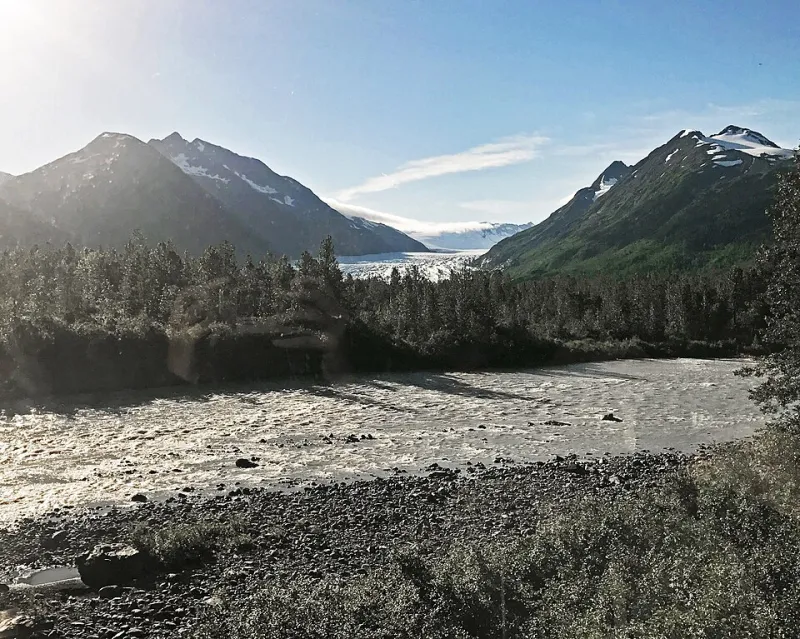
Photo by Photo by Carrie Yang on Unsplash on Unsplash
In the village of Newtok, residents have watched their homes tilt at angles that would be comical if the consequences were not so severe. In Bethel, a municipal water main ruptured last winter after the frozen substrate supporting it shifted several inches over a single season. In communities stretching from the Yukon-Kuskokwim Delta to the North Slope, the phenomenon is the same: permafrost — the permanently frozen ground that has served as the literal foundation of Alaska life for millennia — is thawing at a pace that is outrunning every legal, financial, and governmental system designed to protect property owners.
This is not simply a climate story. It is a property rights story, an insurance story, and above all, a governance story — one that Alaska's state government has yet to resolve and that the federal government has repeatedly mishandled.
The Ground Shifts, and So Does Everything Built on It
Permafrost underlies roughly 80 percent of Alaska's landmass. For generations, it functioned as reliable bedrock. Engineers designed around it. Builders depended on it. Communities were platted on top of it. But as average temperatures in Alaska have risen at more than twice the national rate over the past half-century, that frozen substrate is degrading in ways that are both visible and economically devastating.
The Alaska Department of Natural Resources estimates that infrastructure damage attributable to permafrost degradation costs the state between $340 million and $700 million annually — figures that are widely regarded as conservative given the difficulty of attributing specific damages to a slow-moving, diffuse process. Individual homeowners in affected communities have reported property value losses exceeding 60 percent, in markets where financing was already scarce and buyers were already few.
The damage is not uniform. In some areas, thaw is gradual, producing incremental settling that cracks foundations and misaligns door frames. In others, thermokarst — the sudden collapse of ground that occurs when ice-rich permafrost melts rapidly — can swallow entire sections of yard or undermine a structure's foundation within a single summer season. For residents of rural Alaska who have invested their life savings into modest homes, the distinction matters little. The result is the same: a property that cannot be sold, cannot be insured, and in many cases, cannot safely be occupied.
A Legal Framework Built for Different Ground
Alaska's property law was largely inherited from, and shaped by, federal and territorial frameworks that assumed stable land. The concept of a property boundary presupposes that the land within that boundary will remain where it is. Permafrost collapse challenges that assumption in ways the law has not yet caught up with.
Consider the question of liability. When a road maintained by a borough or municipality subsides due to permafrost thaw and damages a private vehicle — or injures a pedestrian — the question of governmental liability becomes genuinely murky. Alaska's sovereign immunity statutes provide broad protections to public entities, but courts have been inconsistent in determining when infrastructure failure attributable to climate-driven ground change constitutes a compensable negligence claim versus an act of nature beyond any government's control.
For private landowners, the situation is equally ambiguous. Easements, mineral rights, and surface rights agreements that were negotiated when land was stable now carry unforeseen implications as the physical character of that land changes. Some legal scholars have begun arguing that Alaska needs a statutory framework specifically addressing permafrost-related land change — something analogous to the coastal erosion doctrines that govern shifting shorelines in other states — but no such legislation has advanced through the Alaska State Legislature.
The Insurance Gap No One Is Talking About
If the legal framework is inadequate, the insurance market is arguably worse. Standard homeowner's insurance policies in Alaska, as elsewhere in the United States, do not cover ground movement. Subsidence, settling, and earth movement are explicitly excluded from virtually every residential policy sold in the state. The reasoning, from an actuarial standpoint, is straightforward: ground movement is considered a geological risk, not an insurable hazard in the conventional sense.
The consequence for Alaskan homeowners is that they bear the full financial weight of permafrost-related damage entirely on their own. A family in Fairbanks whose foundation cracks due to differential settling has no insurance claim to file. A homeowner in Kotzebue whose septic system fails after the surrounding ground shifts has no coverage to fall back on. In communities where median household incomes are already well below the state average, these uninsured losses can be financially catastrophic.
Some insurance industry analysts have suggested that a state-backed risk pool — modeled loosely on programs that exist for flood insurance or earthquake coverage in other states — could help distribute the financial risk more equitably. The Alaska Division of Insurance has acknowledged the coverage gap in internal reports but has not yet put forward a formal proposal. Critics of a state-backed solution point to the fiscal pressures already facing Alaska's budget and question whether the state has the capacity to absorb the liability such a program would entail.
Federal Disaster Policy and the Alaska Mismatch
When communities in the Lower 48 experience natural disasters, the Federal Emergency Management Agency's Individual Assistance and Public Assistance programs provide a relatively clear pathway to recovery funding. Alaska has found, repeatedly and frustratingly, that these programs were not designed with its circumstances in mind.
FEMA's disaster declaration process requires a discrete triggering event — a flood, a hurricane, an earthquake. Permafrost degradation is a chronic, slow-onset process. It does not generate the dramatic imagery that drives federal disaster declarations. It does not produce a single moment of catastrophe that satisfies the bureaucratic threshold for emergency designation. As a result, communities experiencing severe infrastructure loss due to permafrost thaw have routinely been denied the federal assistance that would be available to a community experiencing a more photogenic disaster.
The Alaska congressional delegation has pushed for reforms to FEMA's disaster eligibility criteria that would accommodate slow-onset climate hazards, with limited success. The most recent federal infrastructure legislation included some provisions for climate resilience funding that Alaska communities can access, but advocates argue the application process remains poorly suited to rural Alaska's administrative capacity and that the funding levels fall far short of documented need.
What State-Level Action Could Look Like
Several proposals have circulated in Juneau in recent legislative sessions, though none has yet moved from concept to statute. Among the most frequently discussed is a Permafrost Impact Mitigation Fund — a dedicated state account that would provide low-interest loans or direct grants to homeowners and small municipalities dealing with permafrost-related structural damage. Proponents argue that early intervention is far cheaper than emergency relocation, which has already cost the state tens of millions of dollars in communities like Newtok and Shishmaref.
A second proposal involves amending Alaska's building code to require permafrost stability assessments for new construction in affected regions — a measure that would prevent the compounding of future liability even if it does nothing to address existing damage. A third approach, favored by some legal scholars, would establish a state ombudsman's office specifically tasked with coordinating permafrost-related property disputes, insurance claims, and governmental liability questions.
None of these solutions is without cost or complication. But the absence of any coherent policy response carries costs of its own — measured in abandoned homes, displaced families, and communities that are losing the physical and economic foundation of their existence.
The Clock Is Running
For Alaskans living on thawing ground, the policy debate in Juneau and Washington can feel abstract and distant. What is immediate is the crack spreading across the living room floor, the door that no longer closes, the water line that froze in a new place this year because the ground shifted again.
Alaska's state government owes its residents more than acknowledgment of the problem. It owes them a legal framework that reflects the reality of the land they live on, an insurance environment that does not leave them entirely exposed, and an honest engagement with the federal government about why existing disaster policy consistently fails the state's most vulnerable communities. The ground beneath Alaska is changing. The governance structures built on top of it need to change as well.