Classrooms Without Teachers: The Quiet Collapse of Rural Alaska's Educational Foundation
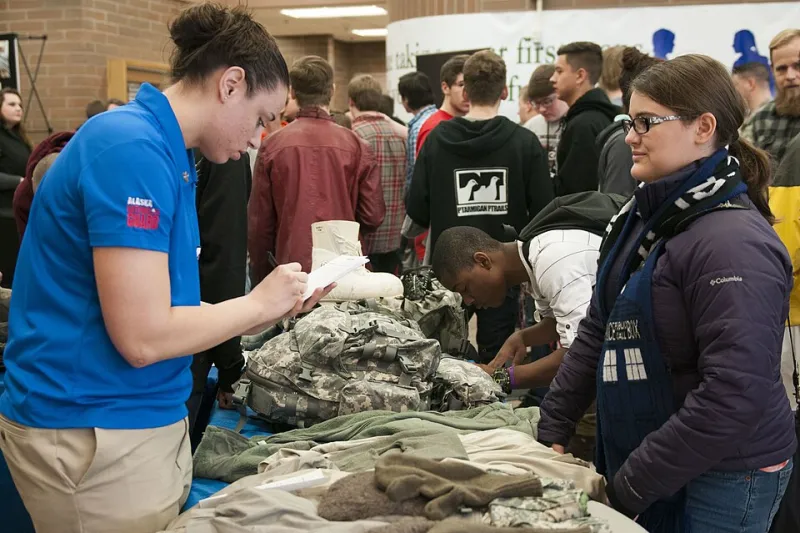
Photo: Sgt. Marisa Lindsay, Public domain, via Wikimedia Commons
In the Yukon-Kuskokwim Delta, a region spanning roughly 75,000 square miles and home to dozens of predominantly Yup'ik communities, some school principals have spent entire summers making phone calls to teacher recruitment agencies, posting listings on out-of-state job boards, and reaching out to university placement offices — only to begin the school year with positions still vacant. Substitute teachers, often uncertified, are pressed into long-term classroom roles. In some cases, students attend class via video link while a paraprofessional monitors the room.
This is not an isolated phenomenon. It is the lived reality of rural education in Alaska, and it is getting worse.
The Numbers Behind the Crisis
Alaska consistently ranks among the most difficult states in the nation in which to fill rural teaching positions. According to data from the Alaska Department of Education and Early Development, teacher vacancy rates in remote districts routinely run three to five times higher than those in Anchorage or Fairbanks. In some of the smallest districts — those serving fewer than 200 students across multiple villages — turnover rates can exceed 40 percent annually.
The reasons are well documented, if not yet adequately addressed. Starting salaries for teachers in many rural districts lag behind those offered in urban Alaska and are far below what comparably credentialed professionals earn in the Lower 48. Geographic isolation means that educators who relocate to places like Bethel, Dillingham, or the communities of the Northwest Arctic Borough must contend with the high cost of fly-in groceries, limited medical services, and months of extreme weather — all while separated from professional networks and family support systems.
Career advancement presents another structural barrier. A teacher in a village school may find herself as the sole instructor for multiple grade levels, with no department chair to aspire to, no curriculum coordinator role to pursue, and no administrative ladder to climb without leaving the community entirely.
Voices From the Classroom — and From Beyond It
Amanda Rourke spent three years teaching middle school science in a Southwest Alaska village before relocating to Oregon in 2021. She describes her time there with genuine affection — the relationships she built, the students who surprised her, the landscape that still pulls at her. But she is candid about what drove her away.
"The isolation was something I thought I was prepared for," she said in a phone interview. "What I wasn't prepared for was the feeling that the system wasn't set up for me to succeed. I had 14 kids across three different grade levels, no science lab to speak of, and internet connectivity so unreliable that half my lesson plans had to be redesigned on the fly. I wanted to stay. But I also needed to grow as a professional, and I couldn't see a path to doing that there."
Her departure left the district scrambling. Her position was filled the following year by a first-year teacher from the Midwest who left before Thanksgiving.
Superintendent Harold Evan of a mid-sized Southwest Alaska district — who asked that his district not be named to avoid discouraging prospective applicants — put the challenge in stark terms. "We are competing with suburban districts in Washington, Colorado, and Texas that can offer higher base pay, lower cost of living, and a support structure we simply cannot match. We're not losing this competition on merit. We're losing it on resources."
The Cultural Dimension That Statistics Miss
For Alaska's Indigenous communities, the teacher shortage carries dimensions that extend well beyond academic performance metrics. Village schools are often among the only institutions capable of reinforcing Native languages, traditional ecological knowledge, and cultural practices within a formal educational setting. When a school loses its staff mid-year — or fails to hire at all — it loses more than instructional capacity. It loses continuity.
Elders in several communities have noted that the revolving door of outside teachers, however well-intentioned, creates a persistent disconnect. Educators unfamiliar with Yup'ik, Athabascan, Inupiaq, or Tlingit cultural frameworks may inadvertently undermine the community-based learning models that local leaders have worked for decades to establish.
"Every time we get a new teacher who doesn't know our community, we spend the first year just building trust," said one Tribal council member from a village on the Kuskokwim River. "And then they leave, and we start over. The kids are the ones who pay for that."
Efforts to recruit and train Alaska Native educators have gained some traction through programs at the University of Alaska Fairbanks and the University of Alaska Southeast, but the pipeline remains narrow. Structural barriers — including the cost of obtaining a teaching credential and the difficulty of completing student teaching requirements in remote areas — continue to limit participation.
Policy Responses: Incremental, and Insufficient
The Alaska Legislature has taken some steps to address the crisis. Loan forgiveness programs for educators who commit to rural service, modest housing stipends in select districts, and enhanced recruitment partnerships with Lower 48 universities have all been deployed in some form. Yet educators and administrators across the state are largely in agreement: these measures, while valuable, do not approach the scale of the problem.
Advocates have called for a significant restructuring of the state's Base Student Allocation formula — the mechanism through which state education funding is distributed — to provide rural districts with resources commensurate with their recruitment and retention challenges. Proposals have also emerged for a dedicated rural educator corps modeled loosely on programs like Teach For America, though with a longer commitment period and deeper investment in community integration.
At the federal level, Title VII funds directed toward Alaska Native education provide some supplemental support, but those allocations have remained largely flat in recent years even as costs have risen.
What Remains at Stake
Education is not merely a policy priority in rural Alaska. It is, for many communities, the single most consequential determinant of whether the next generation remains, thrives, and carries forward the cultures and economies of their home regions. A school that cannot retain qualified teachers is not simply underperforming on state assessments. It is failing in its most fundamental obligation to the young people it serves.
The communities of rural Alaska have persisted through extraordinary hardship across generations. They are not asking for sympathy. They are asking for the same investment in their children's futures that residents of Anchorage, Juneau, and Fairbanks have long taken for granted.
Whether Alaska's political institutions — in Juneau and in Washington — are prepared to answer that ask with more than incremental gestures remains, for now, an open question. The classrooms, however, cannot afford to wait for a definitive answer.