Disconnected by Design: How the Broadband Gap Is Draining Rural Alaska of Its Future

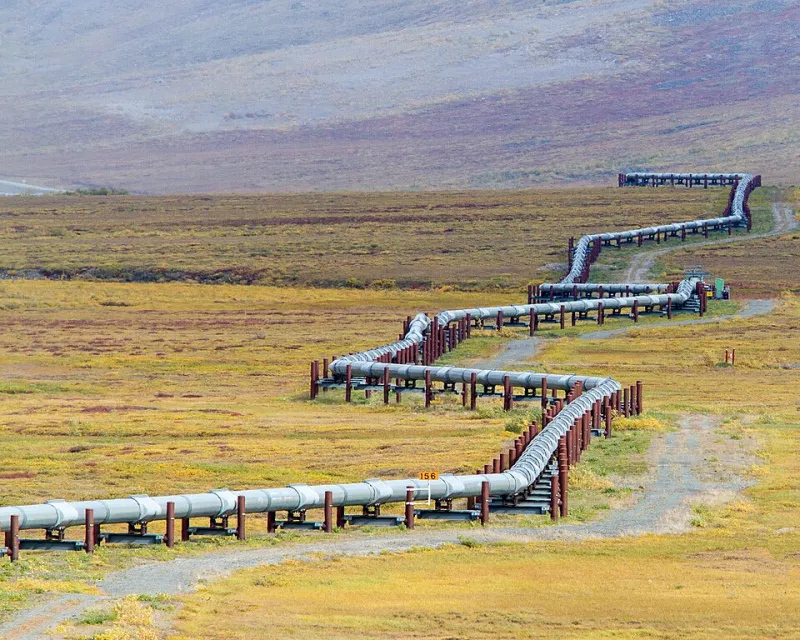
Photo: USDAgov, Public domain, via Wikimedia Commons
In most of the contiguous United States, a slow internet connection is an inconvenience. In rural Alaska, it can be the difference between a community that survives and one that quietly disappears.
For thousands of Alaskans living beyond the road system, broadband connectivity remains either prohibitively expensive, technically unreliable, or simply nonexistent. The consequences extend well past frustration with buffering video calls. Businesses cannot operate. Medical consultations go unmade. Young residents leave for cities where opportunity is measured, in part, by the quality of a Wi-Fi signal. What is unfolding across Alaska's remote communities is not merely a technology problem — it is a governance failure with generational stakes.
A Infrastructure Gap With Real Human Costs
Alaska consistently ranks among the worst-served states in the nation when it comes to rural broadband access. According to data from the Federal Communications Commission, a substantial portion of rural Alaskans lack access to speeds that meet the federal definition of broadband — 25 megabits per second for downloads and 3 megabits per second for uploads. In many villages, the available speeds fall so far below that threshold that they barely support basic web browsing, let alone the data-intensive applications that modern economic and medical life demands.
The geography is, admittedly, daunting. Laying fiber-optic cable across hundreds of miles of permafrost, mountain terrain, and open tundra presents engineering and financial challenges that do not exist in the Lower 48. But geography alone does not explain the depth of the problem. Policy choices, funding gaps, and regulatory structures have compounded the natural obstacles, leaving rural Alaskans to pay some of the highest rates in the country for some of the worst service.
In communities like Bethel, Dillingham, and dozens of smaller villages throughout the Yukon-Kuskokwim Delta and the Alaska Peninsula, residents describe a daily negotiation with connectivity that urban Alaskans would find difficult to comprehend. A telemedicine appointment with a specialist in Anchorage can collapse mid-session due to bandwidth limitations, forcing patients to either reschedule or forgo care entirely. Students attempting to complete coursework through the University of Alaska's distance learning programs routinely encounter connection failures that their peers in Fairbanks or Juneau never experience.
The Economic Toll on Communities Already Under Pressure
The broadband gap is not only a public health concern — it is an economic accelerant working against rural Alaska's already fragile commercial base.
Small business owners in remote communities describe an environment where basic operational tasks become genuine burdens. Processing credit card transactions, managing inventory through cloud-based systems, filing taxes electronically, or even maintaining a functional business website can be unreliable or impossible under current connectivity conditions. Several entrepreneurs in communities along the western coast have reported relocating their operations to Anchorage or Fairbanks not because of a lack of local demand, but because they could not sustain a modern business without reliable internet access.
The ripple effects extend further. When businesses leave, employment opportunities shrink. When employment opportunities shrink, residents — particularly younger ones — follow the work. This pattern feeds a demographic decline that further reduces the economic case for infrastructure investment, creating a cycle that is remarkably difficult to interrupt without deliberate public intervention.
Fisheries-related businesses, which form a backbone of the rural Alaska economy, have been particularly affected. Processing operations, logistics coordination, and market communications increasingly depend on real-time data exchange. Operators working out of remote coastal communities report competitive disadvantages relative to better-connected rivals, not because of the quality of their catch, but because of the infrastructure beneath their operations.
Telemedicine: When Connectivity Becomes a Medical Necessity
Perhaps nowhere is the cost of the broadband gap more viscerally apparent than in health care. Alaska's rural medical system has long operated under extraordinary strain — a reality documented extensively in reporting on the state's health infrastructure challenges. Telemedicine was widely heralded as a partial solution, a way to extend specialist care to communities that cannot realistically support full-time physicians.
But telemedicine requires bandwidth. High-definition video consultations, the transmission of diagnostic imaging, and the remote monitoring of chronic conditions all demand connectivity that much of rural Alaska simply cannot provide. Community health aides — the frontline medical workers in many villages — describe situations in which they are unable to reach consulting physicians in real time, forcing them to make clinical decisions with less support than the situation warrants.
The consequences are not hypothetical. Medical providers and community advocates in the region have documented cases in which delayed or degraded telemedicine access contributed to worse patient outcomes. For a state already grappling with some of the nation's starkest rural health disparities, the broadband gap is not a peripheral issue. It sits at the center of the problem.
What State Policy Could Actually Do
The federal government has directed significant funding toward rural broadband expansion in recent years, including allocations through the Infrastructure Investment and Jobs Act that hold particular promise for states like Alaska. However, federal dollars alone — disbursed through programs that sometimes struggle to account for Alaska's unique logistical realities — have not closed the gap.
State-level action remains both necessary and largely insufficient to date. Alaska's legislature has periodically taken up broadband as a priority, and the Alaska Broadband Office was established to coordinate infrastructure planning and federal funding applications. Advocates argue, however, that the office remains underfunded relative to the scale of the challenge and that the state lacks a sufficiently aggressive long-term connectivity strategy.
Several policy directions have drawn support from a broad coalition of stakeholders, including tribal governments, health organizations, and business associations. These include establishing a dedicated state broadband fund to supplement federal grants, streamlining permitting processes for infrastructure deployment in rural areas, and developing public-private partnership frameworks that reduce the financial risk for providers willing to serve high-cost communities.
Tribal entities have also emerged as important actors in this space. Several Alaska Native organizations have pursued their own connectivity projects, leveraging federal tribal broadband funding to build networks that state and commercial providers have declined to construct. These efforts deserve both recognition and more robust state support.
Connectivity as a Civic Right
The framing of broadband as a utility — as fundamental to modern life as electricity or running water — has gained considerable traction nationally. In Alaska, that argument carries particular weight. Communities that lack reliable internet access are not merely inconvenienced; they are structurally disadvantaged in ways that compound over time, affecting education, health, economic vitality, and the basic ability of residents to participate in civic and commercial life on equal footing with their urban counterparts.
Alaska has always demanded a degree of self-reliance from its residents. But self-reliance cannot substitute for infrastructure investment when the infrastructure gap is this severe. The state has a responsibility to ensure that geography does not permanently determine the quality of life available to Alaskans who choose to remain in the communities their families have called home for generations.
The broadband problem is solvable. Other remote regions — in Scandinavia, in Canada, in parts of the rural American West — have demonstrated that political will and sustained investment can bring meaningful connectivity to even the most logistically challenging environments. Alaska has the federal relationships, the institutional capacity, and the urgent need to make this a defining infrastructure priority.
What it has lacked, thus far, is the sustained political commitment to treat the digital divide not as an unfortunate feature of northern geography, but as an injustice that the state has both the power and the obligation to correct.