Drilling Into Democracy: How Extractive Industries Are Rewriting Alaska's Environmental Playbook
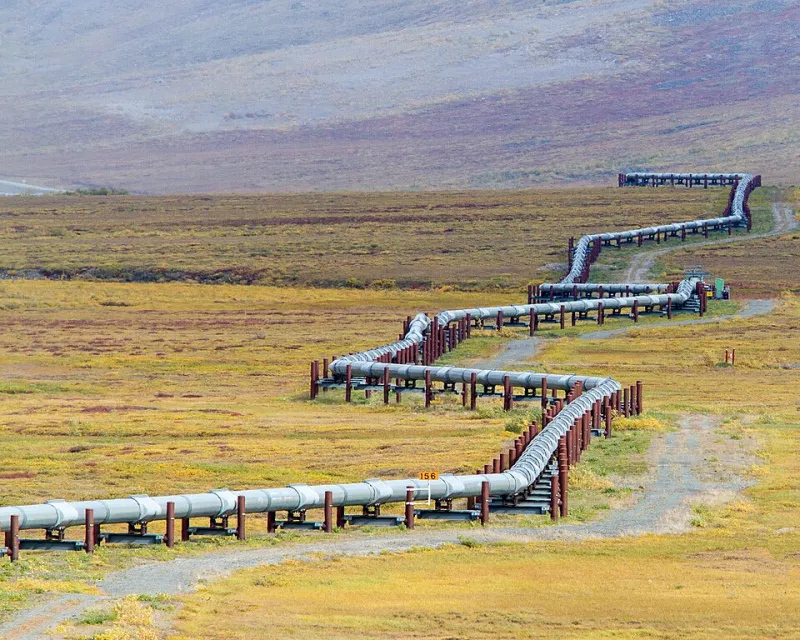
Photo: Arthur T. LaBar, CC BY 2.0, via Wikimedia Commons
For generations, Alaska's regulatory architecture has served as a negotiated peace—a set of hard-won agreements between the state's vast natural wealth and the communities whose lives depend on that wealth remaining intact. That peace is now under considerable strain. As permafrost thaw opens previously inaccessible terrain to potential development, the extractive industry's presence in Juneau's legislative corridors has grown more assertive, more organized, and, critics argue, more effective at bending state environmental rules to accommodate corporate timelines.
What is unfolding in Alaska's capital is not simply a debate about oil and gas. It is a fundamental contest over who governs Alaska's environmental future—and whether ordinary Alaskans will retain meaningful influence over that process.
The Lobbying Architecture Behind the Legislation
Public disclosure records filed with the Alaska Public Offices Commission reveal a sustained and well-funded effort by major extractive companies to shape state environmental policy. During the most recent legislative session, industry-affiliated lobbyists outnumbered environmental advocates in committee hearings by a margin that advocacy groups describe as overwhelming. Several pieces of legislation that passed through the Alaska Legislature's resources committees contained language that environmental attorneys say was drafted in close consultation with industry representatives.
Among the most scrutinized provisions are proposed amendments to Alaska's oil and gas development permitting timelines and revisions to the state's water quality certification process. Taken individually, each amendment appears incremental. Taken together, legal analysts suggest they represent a meaningful compression of the review periods that state agencies use to evaluate environmental risk—review periods that were themselves the product of decades of litigation and public advocacy.
"The strategy is not to make one dramatic move," said one environmental policy researcher familiar with the legislative process, who requested anonymity to preserve professional relationships. "It is to make twenty small moves that, by the time anyone assembles the full picture, have already fundamentally altered the landscape."
Permafrost as Opportunity—and as Warning
The accelerating thaw of Alaska's permafrost is, paradoxically, creating both the problem and the pretext for the current regulatory push. As frozen ground destabilizes, it exposes mineral-rich subsoil that was previously inaccessible or economically impractical to develop. For extractive industries, this represents a new frontier. For Alaska Native communities and environmental scientists, it represents an accelerating catastrophe that demands greater regulatory caution, not less.
The irony is not lost on indigenous leaders across the state. Communities in the Yukon-Kuskokwim Delta, the North Slope, and Interior Alaska are watching the very ground beneath their homes, roads, and cultural sites shift and subside—and simultaneously watching the legislature consider measures that would reduce the oversight applied to industrial activity in those same regions.
"The land is telling us something," said one tribal administrator from a community on the Yukon River, speaking at a public forum in Anchorage earlier this year. "And the response in Juneau seems to be to stop listening."
Permafrost degradation complicates environmental impact assessments in ways that existing regulatory frameworks were not designed to address. When ground conditions change unpredictably, spill containment projections, infrastructure stability analyses, and water table models can become unreliable within years of their completion. Environmental advocates argue that this scientific uncertainty demands more rigorous review standards—a position that directly conflicts with industry's preference for streamlined approval processes.
The Grassroots Response
Opposition to the regulatory rollback is not confined to professional environmental organizations. Across Alaska, a diverse and increasingly coordinated network of community groups, tribal councils, and local advocacy organizations is mobilizing to challenge what they describe as a governance crisis.
In Southeast Alaska, fishing communities have organized letter-writing campaigns and testified in Juneau against provisions they believe would weaken protections for salmon habitat. On the North Slope, tribal governments have formally requested consultation rights under federal law before state permits are issued for projects affecting traditionally used lands. In Fairbanks, a coalition of university researchers, retired state agency employees, and neighborhood associations has begun publishing detailed analyses of proposed regulatory changes and distributing them through community networks.
The Alaska Center, Trustees for Alaska, and several tribal nonprofit organizations have also filed or signaled intent to file legal challenges against specific regulatory changes, arguing that the state failed to conduct adequate public notice and comment processes before implementing administrative rule modifications.
What distinguishes this moment from previous cycles of environmental advocacy in Alaska is the degree to which indigenous sovereignty arguments are being woven into what were once primarily conservation-framed debates. Tribal leaders are increasingly invoking treaty rights, federal trust responsibilities, and the United Nations Declaration on the Rights of Indigenous Peoples as legal and moral frameworks for challenging state regulatory decisions—a shift that has complicated the industry's political calculus and introduced new legal uncertainties into the permitting process.
The Legislature's Divided House
Within the Alaska Legislature, the regulatory debate has not produced clean partisan divisions. Several Republican legislators from rural districts have expressed reservations about provisions that could affect subsistence resources in their communities. A handful of Democrats representing urban constituencies have been more accommodating of industry positions than their party's national platform might suggest, reflecting the economic anxieties of constituents who depend on resource sector employment.
The most contested legislative battleground has been the House Resources Committee, where a series of amendments to the Alaska Oil and Gas Conservation Commission's operating standards have moved through without the extended public testimony periods that critics believe the subject matter warrants. Committee leadership has defended the process as efficient and responsive to economic development priorities. Opponents counter that efficiency, in this context, is a mechanism for limiting democratic participation.
Governor Mike Dunleavy's administration has generally signaled support for reducing regulatory burdens on the extractive sector, framing streamlined permitting as essential to maintaining Alaska's competitiveness for investment. Administration officials argue that robust development activity generates the state revenues that fund public services—an argument that carries genuine weight in a state without a personal income tax and with a Permanent Fund under recurring fiscal pressure.
What Alaskans Deserve to Know
The debate over Alaska's environmental regulatory framework is, at its core, a debate about democratic accountability. Who writes the rules that govern Alaska's most consequential industries? Whose voices are heard when those rules are revised? And what mechanisms exist to ensure that the Alaskans most directly affected by development decisions—those who live near the projects, drink from the rivers, and depend on the fish and game—have genuine influence over the process?
These are not abstract questions. They are questions with direct consequences for communities from Utqiaġvik to Ketchikan, from Nome to Valdez. The regulatory choices made in Juneau over the next several legislative sessions will shape the state's environmental and economic landscape for decades.
Alaskans First believes that every resident of this state—regardless of whether they work in the oil fields, the fisheries, or the tribal offices—deserves a regulatory process that is transparent, scientifically rigorous, and genuinely open to public participation. The current trajectory raises serious questions about whether that standard is being met. Those questions deserve sustained public attention, not quiet resolution in legislative subcommittees.