Empty Waiting Rooms: How Alaska's Rural Health System Is Unraveling From the Inside Out
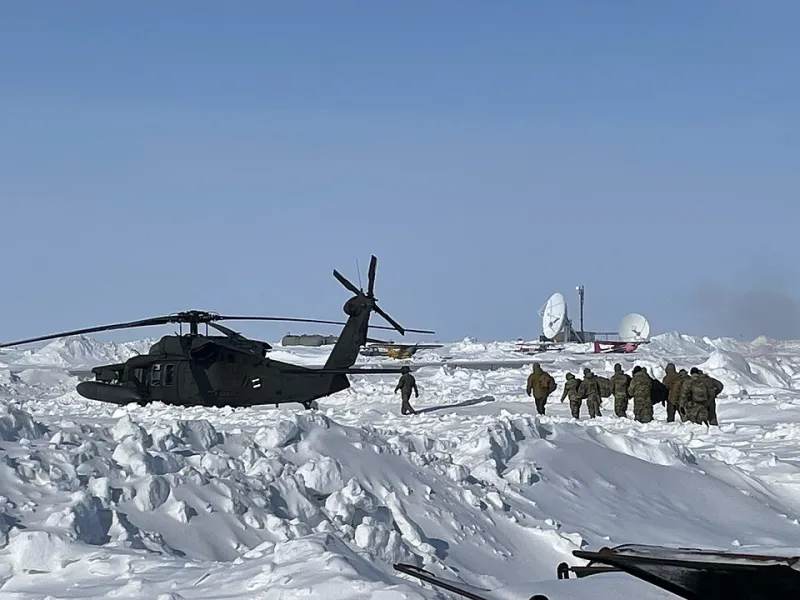
Photo: The National Guard, CC BY 2.0, via Wikimedia Commons
In a village accessible only by small aircraft or seasonal river travel, a single community health aide may be the closest thing to a physician for hundreds of residents. When that aide leaves—for Anchorage, for Seattle, for anywhere with a lower grocery bill and a paved road—the question of who fills the gap rarely has a clean answer. Increasingly, the answer is no one.
Alaska's rural healthcare workforce crisis is not new. It has been documented, discussed, and decried for decades. But a convergence of post-pandemic labor pressures, accelerating cost-of-living increases, and chronic state budget constraints has transformed a persistent challenge into something closer to an emergency. Clinics that once operated with skeletal but functional staffing are now operating intermittently—or not at all.
The Numbers Behind the Departures
Alaska consistently ranks among the most medically underserved states in the nation. The Health Resources and Services Administration designates vast swaths of the state as Health Professional Shortage Areas, a federal classification that acknowledges the obvious: there are not enough doctors, nurses, or allied health professionals to meet basic population needs across much of Alaska's geography.
Physician vacancy rates at rural facilities have climbed sharply in recent years. Registered nurses, who form the operational backbone of smaller clinics, are leaving the state at rates that outpace recruitment efforts. The reasons are not difficult to understand. A nurse who can earn comparable wages in Oregon or Washington—while paying a fraction of Alaska's housing and grocery costs—faces a compelling economic calculus that state recruitment materials alone cannot overcome.
For communities in the Yukon-Kuskokwim Delta, the Bristol Bay region, or the North Slope, the departure of even one qualified provider can eliminate access to prenatal care, chronic disease management, or emergency stabilization for thousands of square miles of territory.
What Closing Looks Like in Practice
The closure of a rural clinic does not typically involve a formal announcement or a ribbon-cutting in reverse. It looks more like reduced hours, then appointment-only scheduling, then a sign on the door directing patients to call a number that rings in a distant administrative office. It looks like a diabetic elder rationing insulin because the nearest pharmacy is a $400 round-trip flight away. It looks like a young mother delivering a child in circumstances no obstetric team would consider acceptable anywhere else in the country.
Mortality statistics in Alaska's rural regions reflect this reality with uncomfortable precision. The state's rural-urban disparity in preventable death rates is among the starkest in the United States. Cardiovascular disease, diabetes complications, and maternal mortality all disproportionately claim lives in communities where consistent medical oversight is unavailable. Behavioral health crises, which require timely intervention and ongoing therapeutic relationships, are particularly poorly served by a system that can barely sustain physical health infrastructure.
Public health officials and tribal health organizations have long sounded alarms about these disparities. The data supports their concerns. The political will to address root causes has been slower to materialize.
Systemic Barriers That Recruitment Alone Cannot Fix
Attracting healthcare workers to rural Alaska requires more than competitive salaries—though compensation certainly matters. It demands addressing a web of structural obstacles that make professional life genuinely difficult for even the most mission-driven providers.
Licensing reciprocity remains a friction point. Physicians and nurses who trained in other states must navigate Alaska-specific credentialing processes that add time and cost to relocation. Telemedicine, which holds real promise for extending specialist access into remote areas, is constrained by broadband infrastructure gaps that leave many villages without the connectivity speeds necessary to support reliable video consultation.
Housing presents perhaps the most immediate barrier. In communities where the rental market barely exists and home purchase is a logistical undertaking requiring barge shipping of construction materials, asking a new hire to secure their own accommodations is often asking the impossible. Providers who arrive without employer-provided housing frequently leave within months, citing the impossibility of establishing stable living conditions.
Professional isolation compounds the challenge. Clinicians working alone in remote settings carry clinical and emotional burdens that urban colleagues share across large teams. Burnout rates in frontier medicine are high, and without robust peer support systems, even providers who arrive with genuine commitment to rural service often find their resolve eroded within a few years.
Communities Fighting Back With Homegrown Solutions
Despite the weight of these obstacles, a number of Alaska communities and tribal health organizations are piloting retention strategies that deserve attention—and replication.
Loan forgiveness programs tied to multi-year service commitments have shown promise in early iterations. By partnering with state agencies and federal programs such as the National Health Service Corps, some organizations have assembled packages that meaningfully reduce the student debt burden carried by young physicians and advanced practice nurses—debt loads that often exceed $200,000 and represent a powerful incentive to choose higher-paying urban markets.
Employer-provided housing initiatives, though expensive to establish, have demonstrated measurable impact on provider retention in several communities. When a clinic can offer a furnished residence as part of a compensation package, the calculus for a prospective hire shifts substantially. Tribal health organizations in western Alaska have been among the most creative in assembling these arrangements, sometimes converting existing community assets into provider housing through intergovernmental agreements.
Grow-your-own pipeline programs represent perhaps the most durable long-term strategy. Initiatives that identify promising students from rural communities and support their pursuit of healthcare credentials—with explicit pathways back to their home regions—address the cultural fit problem that plagues external recruitment. A provider who grew up in a village understands its rhythms, relationships, and needs in ways that no orientation program can replicate. The University of Alaska system and the Alaska Native Tribal Health Consortium have both invested in pipeline development, though funding constraints have limited the scale of these efforts.
What State Government Must Do
Community-level innovation is necessary but insufficient. The scope of Alaska's rural healthcare workforce crisis demands coordinated state action that has, to date, been inconsistent at best.
The Legislature must treat provider retention funding as an essential infrastructure investment rather than a discretionary budget line subject to annual negotiation. The cost of maintaining rural healthcare access is substantial; the cost of losing it—in emergency medical evacuations, in preventable hospitalizations, in the long-term erosion of community health and economic viability—is greater still.
Regulatory modernization, including expanded scope-of-practice provisions for advanced practice providers and streamlined telemedicine frameworks, would extend the reach of the providers Alaska does have. These are not radical proposals; many other states have moved in this direction, and Alaska's geography makes the case for such flexibility more compelling than almost anywhere else in the country.
Finally, the state must engage seriously with federal partners. Alaska's congressional delegation has historically been effective at securing targeted federal investment. Workforce shortage designations, rural health grants, and Indian Health Service funding streams all represent levers that require active advocacy to maximize. The communities bearing the heaviest burden of this crisis deserve to see that advocacy pursued with urgency.
A Question of Political Will
The mechanics of addressing Alaska's rural healthcare workforce shortage are reasonably well understood. Loan forgiveness, housing support, pipeline programs, regulatory flexibility, sustained funding—the toolkit exists. What has been lacking is the sustained political commitment to deploy it at scale.
For the Alaskans living in communities where the clinic is already closed, or where the last provider is quietly updating their resume, the question of political will is not abstract. It is a matter of whether their children will receive routine vaccinations, whether their elders will manage chronic conditions before they become acute crises, and whether their communities will remain viable places to live in the decades ahead.
Alaska has always demanded resilience from its people. It is reasonable, in return, to demand that its institutions meet the basic obligation of keeping those people alive and healthy. The waiting rooms should not be empty.