Priced Out of Paradise: How Alaska's Housing Crisis Is Hollowing Out Its Essential Workforce
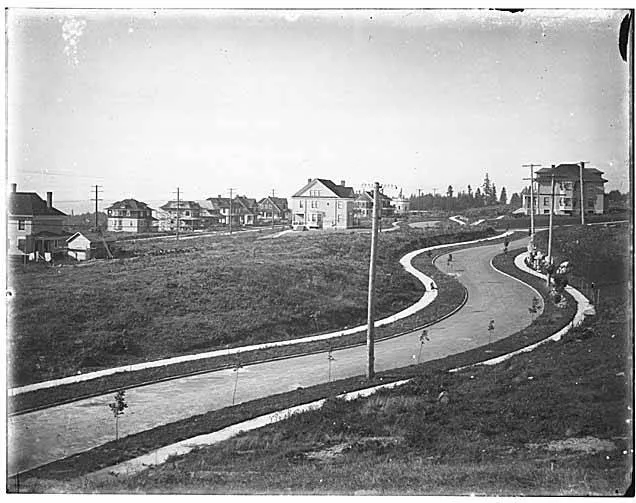
Photo: Arthur Churchill Warner, Public domain, via Wikimedia Commons
There is a quiet exodus underway in Alaska. It does not make headlines the way a resource boom or a federal land dispute might, but its consequences are being felt in understaffed emergency rooms, classrooms with substitute teachers rotating through month after month, and municipal offices struggling to retain experienced personnel. The cause is deceptively simple: the people Alaska needs most can no longer afford to live here.
Housing costs across the state's urban centers and desirable communities have climbed to levels that would strain household budgets in major Lower 48 cities—without the corresponding wage premiums or amenity offerings that might justify the trade-off. In Anchorage, the median home price has surpassed $400,000. In communities like Juneau and Sitka, where geography itself limits developable land, the situation is considerably more severe. For a first-year teacher, a newly licensed nurse, or a mid-career social worker, these numbers do not add up.
When the Math Doesn't Work
Alaska has long marketed itself on the promise of opportunity—a place where hard work and a willingness to endure the elements could yield a stable, prosperous life. That compact is fraying. A registered nurse entering the workforce in Anchorage today, earning a competitive but not exceptional salary, faces a housing market that consumes a disproportionate share of take-home pay before accounting for the elevated cost of groceries, utilities, and transportation that define life in the Far North.
The problem is not unique to any single profession, but it concentrates most visibly among the public-sector and nonprofit workers whose services define community quality of life. School districts in the Mat-Su Valley and on the Kenai Peninsula have reported persistent difficulty filling teaching positions, with housing affordability cited repeatedly in exit interviews and recruitment feedback. Rural hospitals—already operating on thin margins and dependent on a steady pipeline of clinical staff—find that competitive salaries alone are insufficient when there is simply nowhere adequate to live nearby.
The downstream effects compound quickly. When a hospital cannot staff its emergency department adequately, patients travel farther for care or forgo it entirely. When a school district cannot retain experienced educators, student outcomes suffer. These are not abstract policy concerns; they are the lived reality of communities watching their institutional foundations erode.
The Structural Roots of the Problem
Alaska's housing crisis did not emerge overnight, nor does it stem from a single cause. Several structural forces have converged to create conditions of near-permanent scarcity in key housing markets.
Geographic constraint is perhaps the most immovable factor. Juneau, hemmed in by the Tongass National Forest and the waters of the Gastineau Channel, has virtually no room to expand its housing supply through conventional means. Sitka faces similar topographic limitations. Even in Anchorage, where land is nominally more available, the presence of military installations, wetlands subject to federal protection, and established neighborhoods resistant to densification narrows the practical development landscape considerably.
Construction costs present a second formidable barrier. Building in Alaska is expensive under any circumstances. Labor must often be imported, materials arrive via barge or air freight at significant premium, and the construction season is compressed by climate. Estimates suggest that per-square-foot construction costs in many Alaskan communities run 30 to 50 percent above national averages. These economics make it difficult for developers to build at price points accessible to working- and middle-class buyers without some form of subsidy or incentive.
The third force—and one that has intensified in recent years—is market speculation and the growing influence of short-term rental platforms. In communities with strong tourism economies, such as Seward, Homer, and Kodiak, a meaningful share of the available housing stock has been converted to vacation rentals. These properties generate higher returns for owners than long-term leases would, but they remove units from the market available to year-round residents. The result is a rental market that is simultaneously tight and expensive, leaving workers with few options beyond long commutes or departure.
What Other Frontier Regions Are Doing Differently
Alaska is not alone in wrestling with this problem, and examining how comparable regions have responded offers instructive—if imperfect—models.
In northern Canada, several provinces have implemented employer-assisted housing programs in which public institutions partner with municipalities to develop workforce housing specifically reserved for essential employees. Teachers, healthcare workers, and civil servants are offered below-market rents in exchange for multi-year service commitments, creating stability for both the individual and the institution. The model has shown measurable success in retaining professionals in remote and high-cost communities across British Columbia and the Yukon.
Nordic Arctic nations, particularly Norway and Finland, have long treated workforce housing as a component of regional economic policy rather than a purely private-market matter. Municipal land banks, cooperative ownership structures, and targeted construction subsidies have kept housing accessible in communities that would otherwise face the same depopulation pressures Alaska is beginning to experience. The cultural and political context differs substantially, but the underlying logic—that essential workers must be able to afford to live where they are needed—translates across borders.
Closer to home, some rural Alaskan communities have begun experimenting with community land trusts, a model in which land is held collectively and removed from speculative market cycles. Homes built on trust land are sold at below-market prices with resale restrictions that preserve affordability for future buyers. The approach has gained traction in parts of Vermont and Hawaii facing analogous pressures, and early Alaskan efforts, though modest in scale, suggest the model can function within the state's legal and regulatory framework.
The Policy Levers Alaska Has Yet to Pull
State and municipal governments have not been entirely passive in the face of this crisis, but the interventions to date have been modest relative to the scale of the problem. The Alaska Housing Finance Corporation administers a range of loan programs and rental assistance initiatives, and several municipalities have adopted inclusionary zoning requirements that mandate affordable units within larger developments. These are meaningful steps, but they have not bent the affordability curve in any significant way.
What remains largely unexplored is a more assertive role for the state in treating workforce housing as critical infrastructure—analogous to roads, utilities, or broadband connectivity. If Alaska is willing to invest public resources in the physical infrastructure that makes economic activity possible, the argument for similar investment in the human infrastructure that sustains communities deserves serious examination.
Legislative proposals to expand tax incentives for affordable housing development, streamline permitting processes for workforce housing projects, and create state-backed financing mechanisms for employer-assisted housing programs have circulated in Juneau with varying degrees of seriousness. Advancing these ideas from conversation to legislation requires sustained political will and, critically, a recognition that the cost of inaction—measured in deteriorating public services and accelerating population loss—exceeds the cost of intervention.
A Question of Commitment
Alaska asks a great deal of the people who choose to build their lives here. The winters are long, the distances immense, and the cost of daily existence persistently elevated. For generations, those burdens were offset by a sense of belonging to something particular—a place with its own rhythms, values, and rewards that could not be replicated elsewhere.
That bargain holds less reliably when a schoolteacher cannot afford a two-bedroom apartment within reasonable distance of the school where she works, or when a paramedic with a decade of experience decides that the financial arithmetic simply no longer favors staying. Alaska's communities are not just losing workers; they are losing the institutional memory, the professional relationships, and the civic engagement that come with a stable, rooted workforce.
Addressing the housing crisis will require coordination across levels of government, creative financing mechanisms, and a willingness to challenge the assumption that the private market alone will solve the problem. It will also require Alaskans to decide, collectively, what kind of state they want to be—and whether the communities they value are worth the investment required to keep them whole.