Divided Waters: The Battle for Alaska's Salmon and the Future of Who Gets to Decide

Photo: WWWHHHHYYYYYY, CC0, via Wikimedia Commons
For generations, salmon have served as far more than a commercial commodity in Alaska. They are the connective tissue between cultures, economies, and ecosystems — a resource so fundamental that the state's constitution explicitly mandates their sustained yield management. Yet as salmon returns falter across multiple river systems and regulatory authority fractures along jurisdictional fault lines, the promise embedded in that constitutional language is increasingly difficult to keep.
What is unfolding today is not simply a dispute over fish. It is a confrontation over governance, identity, and the distribution of a diminishing resource among parties whose interests rarely align.
A Resource Under Pressure
The data are difficult to dismiss. Chinook salmon returns on the Yukon and Kuskokwim rivers have registered at historic lows in recent years, triggering emergency closures that have reverberated through both commercial fishing fleets and Indigenous communities that depend on the fish for subsistence. In Southcentral Alaska, managers have issued increasingly restrictive harvest limits in Cook Inlet, drawing fierce resistance from commercial operators who argue the restrictions are economically devastating and scientifically unjustified.
Climate change is reshaping the ocean conditions that juvenile salmon depend on for survival. Warming Gulf of Alaska waters have disrupted the prey availability that determines whether young fish survive to return as adults. Meanwhile, shifts in river temperature and timing affect spawning success in ways that managers are only beginning to quantify. The result is a resource system under simultaneous stress from multiple directions — and a regulatory structure that was not designed to absorb that kind of pressure.
Competing Frameworks, Competing Priorities
At the heart of the conflict lies a fundamental tension between two overlapping but distinct regulatory regimes. The State of Alaska exercises primary management authority over most salmon fisheries, operating through the Board of Fisheries and the Alaska Department of Fish and Game. That system is designed to balance commercial, sport, and personal-use interests across a complex web of districts, gear types, and allocation formulas.
But federal authority enters the equation in critical ways. Under the Alaska National Interest Lands Conservation Act of 1980, the federal government holds a rural subsistence priority on federal public lands and waters — a mandate that has generated decades of legal conflict with state management. When the state failed to implement a rural preference that satisfied federal standards in the 1990s, the federal government assumed management of subsistence fishing on federal waters, creating the dual management structure that persists and frustrates today.
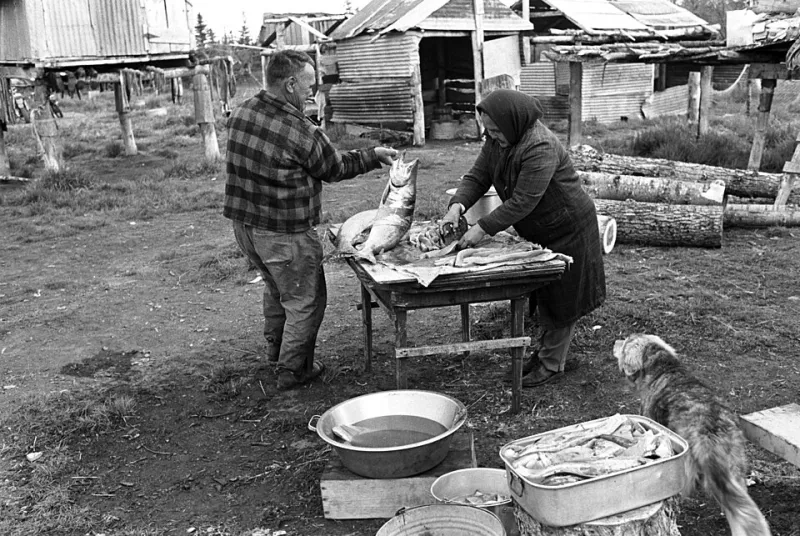
Indigenous communities, particularly those in the Yukon-Kuskokwim Delta, find themselves navigating both systems while advocating for a subsistence priority that is not merely a regulatory category but a cultural and nutritional lifeline. For many villages, salmon is not a supplement to the food supply — it is the food supply. Emergency closures that eliminate subsistence access do not simply reduce a harvest number; they sever a relationship between people and place that spans centuries.
Commercial Interests and the Allocation Debate
Alaska's commercial fishing industry represents billions of dollars in annual economic activity and sustains thousands of jobs, many of them in communities with few alternative livelihoods. Permit holders in Bristol Bay, the Copper River, and Cook Inlet have invested heavily in vessels, gear, and processing infrastructure premised on continued access to salmon stocks. When managers reduce allocations or close fisheries, the financial consequences cascade quickly through small-boat fleets and the coastal towns that depend on them.
Commercial fishing associations have been vocal in challenging what they characterize as federal overreach and inconsistent state management. Some industry representatives argue that the dual management system creates perverse incentives, with each jurisdiction reluctant to impose restrictions that might be absorbed by the other's constituency. Others contend that subsistence allocations, while legally protected, have expanded in ways that reduce commercial opportunity without proportionate conservation benefit.
Those arguments land differently in the villages of Western Alaska, where residents point out that subsistence users were harvesting salmon sustainably for thousands of years before commercial fleets arrived. The framing of subsistence as a competing interest rather than a prior one strikes many Indigenous Alaskans as an inversion of both historical reality and legal principle.
The Governance Gap
What Alaska lacks is a coherent, unified framework for making the hard choices that declining stocks require. The Board of Fisheries process, while public and participatory, is structured in ways that tend to amplify the voices of organized commercial interests over rural subsistence communities that may lack the resources to engage consistently in Juneau. Federal subsistence boards provide an alternative venue, but their authority is limited to federal waters and lands, leaving the broader allocation question unresolved.
There have been periodic calls for a more comprehensive approach — one that would bring state and federal managers into genuine coordination, incorporate Indigenous knowledge alongside scientific data, and establish transparent criteria for allocation decisions when stocks are insufficient to satisfy all users. Those conversations have rarely produced durable results, in part because the political costs of explicit prioritization are high and the institutional incentives for the status quo remain strong.
Some Alaska Native organizations have pursued a different path, seeking federal recognition of tribal co-management authority that would give Indigenous communities a formal seat at the table rather than a position in the public comment queue. That effort faces legal and political resistance, but it reflects a growing conviction that the current governance structure is not capable of protecting subsistence rights without structural reform.
What Alaskans Stand to Lose
The stakes of getting this wrong extend beyond any single fishing season. Salmon are a keystone species whose decline reshapes entire ecosystems — feeding bears, eagles, and the forest soils that receive nutrients from decomposing carcasses. Their cultural significance to Alaska Native peoples is not reducible to pounds harvested; it encompasses ceremony, identity, and intergenerational knowledge that cannot be recovered once interrupted.
For the state as a whole, the mismanagement of salmon would represent a failure of the constitutional stewardship obligation that Alaskans have long held as a point of pride. Alaska built its reputation, in part, on the argument that it could manage its resources better than the federal government. That argument becomes harder to sustain when river systems run empty and communities go without.
The salmon wars will not be resolved by any single regulatory decision or legislative session. They require a sustained commitment to governance that is honest about tradeoffs, inclusive of all affected communities, and grounded in the best available science. Whether Alaska's political institutions are capable of that commitment remains, at this moment, an open question — and the answer will define what kind of state Alaska chooses to be.