Distant Decisions, Local Consequences: How Alaska's Energy Future Is Being Shaped Without Alaskan Voices
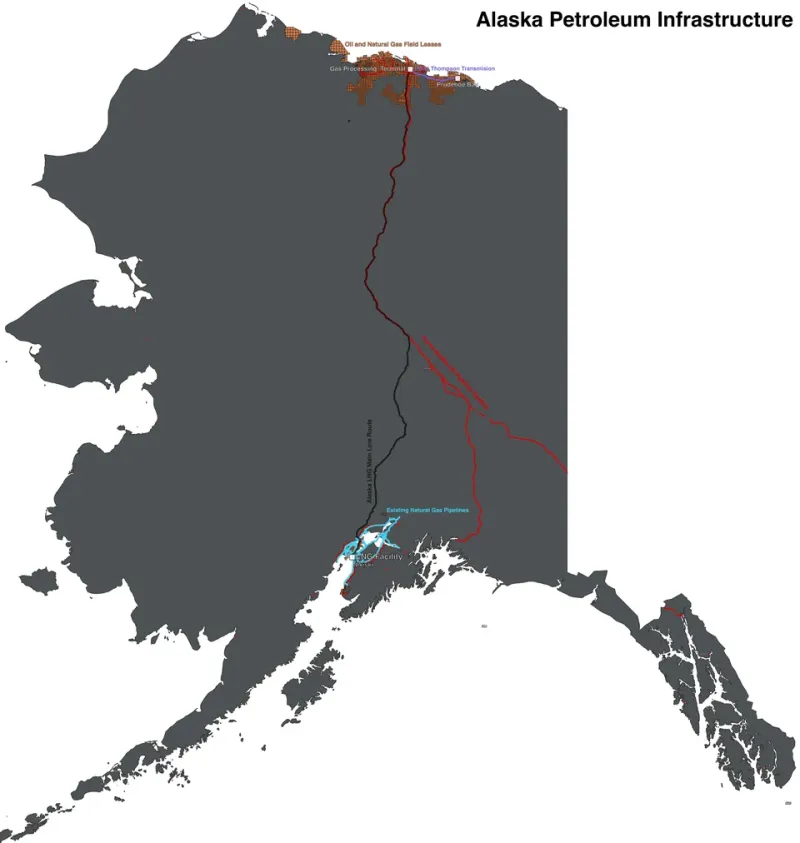
Photo: Wikideas1, CC0, via Wikimedia Commons
Alaska sits atop one of the most energy-rich landscapes on Earth. Its North Slope holds billions of barrels of recoverable oil. Its rivers and coastal waters carry enormous potential for hydroelectric and tidal generation. Its wind corridors are among the most productive on the continent. Yet for all this abundance, the people who live closest to these resources—the fishing families of Bristol Bay, the Indigenous communities of the North Slope, the rural villages dependent on diesel generation—often have the least say in determining how that energy wealth is developed, managed, or distributed.
This is not an accident. It is the predictable result of a policy architecture that concentrates decision-making power in Juneau boardrooms, Washington corridors, and the headquarters of multinational energy corporations, while treating community input as a procedural formality rather than a genuine democratic imperative.
The Illusion of Public Process
On paper, Alaska's energy governance looks participatory enough. The Alaska Energy Authority holds public hearings. The Department of Natural Resources accepts written comments. Federal agencies conduct environmental reviews that technically invite community feedback. But anyone who has sat through one of these processes understands the gap between formal access and actual influence.
Comment periods are often announced with minimal lead time and held in locations or formats that are difficult for rural residents to access. Technical documents run to hundreds of pages, written in regulatory language that presupposes a level of legal and scientific literacy that most community members—however intelligent and knowledgeable about their own land—do not possess. When comments are submitted, responses are formulaic. Decisions, more often than not, proceed as planned.
"We submitted pages of concerns about how a proposed transmission corridor would affect our subsistence areas," said one tribal council representative from Interior Alaska, who asked not to be identified by name due to ongoing negotiations with state agencies. "The response we got back was three paragraphs. It didn't address a single specific point we raised. The project moved forward anyway."
This is not an isolated experience. It reflects a systemic imbalance between the resources available to corporate and state actors and those available to the communities they are supposed to serve.
Oil's Long Shadow
The political economy of Alaska's energy sector is inseparable from oil. Petroleum revenues have historically funded the majority of state government operations, and that financial dependence has created powerful institutional incentives to prioritize extraction over diversification, speed over deliberation, and industry relationships over community accountability.
The influence of major oil producers on Alaska's legislative process is well-documented. Campaign contributions, revolving-door hiring between the regulatory agencies and the industries they oversee, and the sheer lobbying capacity of major operators all tilt the playing field in ways that are difficult for community advocates to counterbalance. When the state legislature debates oil tax policy—as it does with striking regularity—the voices that receive the most sustained attention are those of the producers, not the North Slope communities that live with the environmental and social consequences of extraction.
This dynamic has intensified as oil production has declined from its mid-1980s peak. As revenue pressures mount, the state's appetite for new development projects has grown, and the willingness to entertain community objections has, in some quarters, shrunk correspondingly.
The Renewable Energy Disconnect
One might expect that the push for renewable energy development would offer a corrective—a chance to build an energy future more responsive to community needs and less beholden to extractive industry interests. In some respects, it has. Programs like the Alaska Energy Authority's Renewable Energy Fund have delivered meaningful benefits to rural communities, funding wind, solar, and small hydroelectric projects that have reduced diesel dependence and lowered energy costs in villages that once paid among the highest electricity rates in the nation.
But the renewable transition also carries its own risks of top-down imposition. Large-scale wind and solar projects, increasingly attractive to outside investors drawn by federal tax incentives, can face the same disconnect from local priorities as oil development. Land-use conflicts, impacts on wildlife corridors, and concerns about who actually captures the economic benefits of generation—these questions arise in renewable development just as they do in fossil fuel extraction, and they demand the same quality of community engagement.
The lesson is not that renewable energy is bad for Alaska. It is that the process by which any energy project is conceived, sited, and governed matters enormously—and that process must be fundamentally reformed if it is to serve Alaskans rather than simply extract value from Alaska.
What Genuine Local Control Would Look Like
Advocates for community-centered energy governance are not calling for paralysis or reflexive opposition to development. They are calling for a rebalancing of power that would give affected communities meaningful—not cosmetic—authority over decisions that shape their lives.
In practical terms, this would mean earlier and more substantive engagement with tribal governments and municipal bodies before project applications are finalized. It would mean funding community technical assistance so that residents can meaningfully evaluate complex proposals rather than simply reacting to them after the fact. It would mean revenue-sharing structures that direct a genuine portion of energy wealth back to the communities hosting infrastructure, not merely token impact payments negotiated from a position of institutional weakness.
Several models exist elsewhere in the country and internationally. Some Nordic nations have built community ownership stakes directly into wind energy development frameworks. Certain tribal compacts in the Lower 48 have secured meaningful co-management authority over energy resources on or adjacent to tribal lands. These are not utopian blueprints; they are working examples of what is possible when political will exists.
The Accountability Alaska Deserves
Alaska's energy resources belong, in the most fundamental sense, to the people of Alaska. The state constitution affirms as much. But constitutional language is only as meaningful as the governance structures built to honor it.
Right now, those structures are failing too many Alaskans. Decisions with generational consequences are being made in rooms where local voices are an afterthought. Revenue flows in directions that do not adequately reflect the costs borne by host communities. And the communities with the most at stake—rural, Indigenous, economically vulnerable—are the ones with the least institutional leverage to push back.
Changing this will require more than goodwill. It will require legislative action, regulatory reform, and a political culture that treats community accountability as a non-negotiable condition of energy development rather than an obstacle to it. Alaskans deserve nothing less than that standard—and it is past time to demand it.